HOA Gatehouse Watchlists: What to Do When an Alert Appears
A possible match appears while a guest is waiting. Here’s how gate staff can check the record, get an entry decision, and close out a mistaken alert.
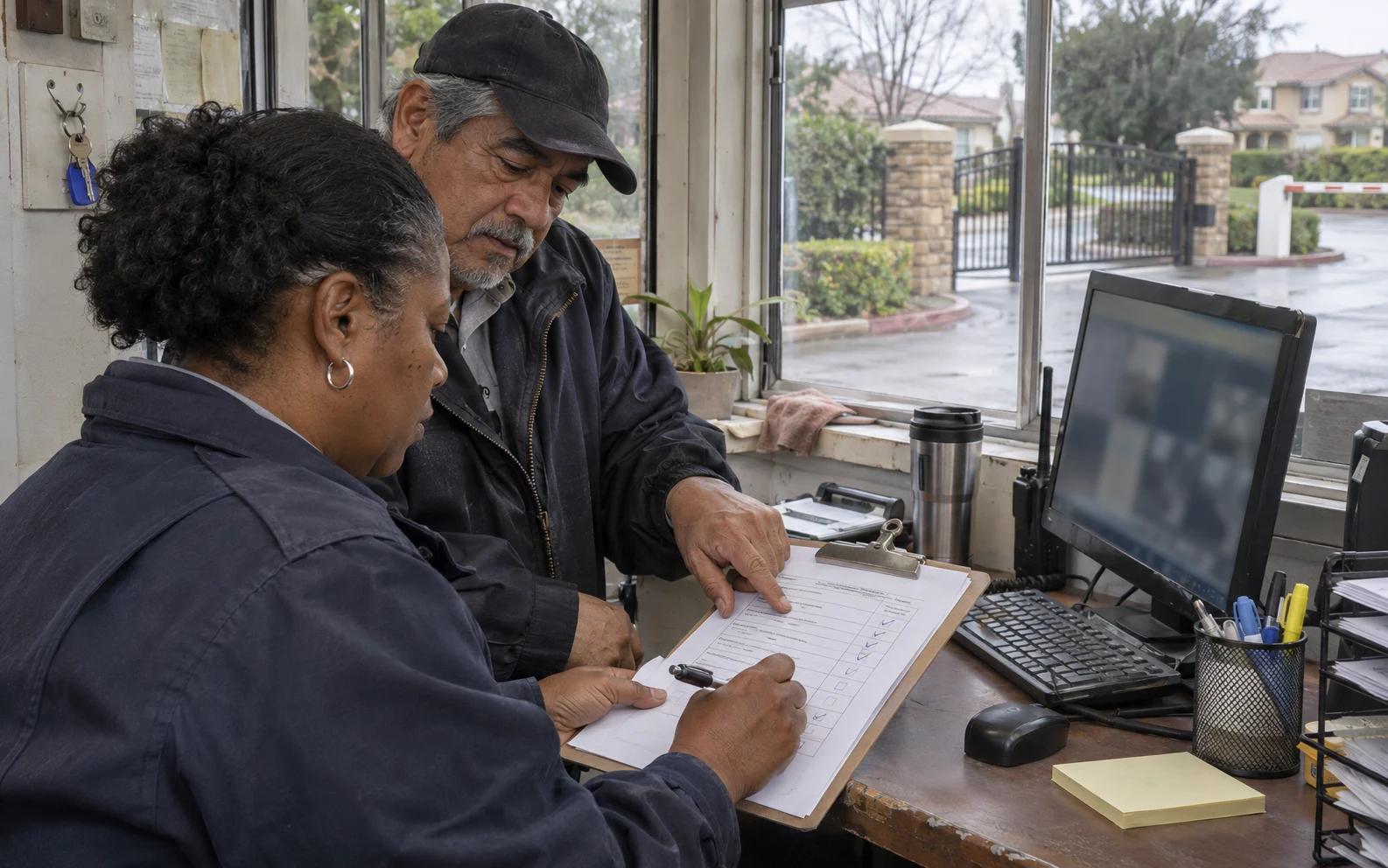
A resident has invited a contractor for the morning. When the van arrives, a plate alert appears alongside the invitation. The attendant now has two questions: Does the alert actually apply to this arrival? Who can decide whether the visit may proceed?
A possible match calls for a human review. Keep the visitor’s ordinary check-in record open, verify what triggered the alert, and use the community’s written entry procedure. A plate can identify a vehicle while leaving the driver’s identity unknown.
What gate staff should do with a possible match
- Keep the conversation routine. “Thank you for waiting while I verify the visit” gives the visitor a clear explanation without disclosing another person’s information. Use the gatehouse’s private channel for the review.
- Check what matched. For a vehicle alert, compare the plate image with the recorded characters and issuing jurisdiction. For a name alert, use the identifiers your check-in policy permits and the approved visit record. A shared surname or resemblance alone leaves the match unresolved.
- Check the instruction. Read the entry’s source, scope, and expiration. Does it concern this person, this vehicle, or an earlier visit? Does it ask staff to notify a manager, or does it record a current access decision? If the instruction is unclear, contact the designated supervisor.
- Follow the reviewed outcome. If the details differ, close the alert as a mismatch and resume ordinary check-in. If they agree and the instruction is current, carry out only the action assigned to your role. If uncertainty remains, use the on-call decision maker and the community’s after-hours procedure.
- Record the resolution. Enter the alert reference, time, checks performed, decision maker, and outcome in the approved log. If the next shift must follow up, give it a named owner and a due time.
If someone is injured or there is an immediate threat, follow the community’s emergency procedure and call 911 in the United States. Give dispatch the gate location and describe what you directly observed. A routine database alert alone is insufficient reason to detain or pursue a visitor. National 911 Program guidance
A false match at the contractor lane
In the morning example, the van’s plate characters match the watchlist entry, but the issuing states differ. The attendant checks the image, confirms the discrepancy, and records “issuing state differs.” The contractor then completes the same invitation check as any other visitor.
Closing this event leaves the original watchlist entry available for its intended purpose. If the original entry itself contains the wrong state, the manager who owns it should verify the source, correct the entry, and confirm that other staffed gates received the change. That distinction matters when a different attendant sees the van tomorrow.
What belongs on an HOA gatehouse watchlist?
A watchlist is a set of records that call for review when an arrival meets specified criteria. Staff may also hear “person of interest” (POI) or “be on the lookout” (BOLO). Those labels alone tell an attendant very little. A useful entry gives the attendant a specific instruction, such as “contact the duty manager to verify current vendor authorization.”
Give each entry an approved purpose, a source the reviewer can check, the minimum identifiers needed, a responsible manager, and a review or expiration date. Route requests to add someone through that manager. A neighbor’s allegation, an assumption about someone’s appearance, or a note copied from a shift chat is a poor basis for a lasting record.
Who owns the entry decision and the correction?
The attendant verifies the alert, handles routine check-in within their authority, and records what happened. The shift supervisor handles uncertain matches and applies the community’s written entry policy. The community manager designates who can approve restrictions, reviews disputed entries, and makes sure stale records are retired. Document the actual names or on-call roles at your property so a weekend attendant knows whom to reach.
Give residents, visitors, and vendors a private way to request a correction. The reviewer should compare the disputed entry with its source, document the outcome, and tell the requester how the matter was resolved without disclosing anyone else’s record. Limit access to the staff who need it and apply the association’s retention policy to both the alert and its review history.
Test the procedure before the first live alert
Use fictional records at a shift handover. Ask two attendants to work through three arrivals: a vehicle with a similar plate, two guests with the same name, and a valid invitation paired with an expired instruction. For each, ask who makes the decision, what the visitor hears, and what the next shift sees. If the answers differ, revise the written instruction and run the example again.
When evaluating license plate recognition for an HOA, ask the provider to demonstrate review and correction with your proposed configuration. The International Association of Chiefs of Police identifies plate accuracy, issuing jurisdiction, and current record status as distinct verification checks in its guidance for law enforcement. An HOA can use those checks when designing its own gatehouse review process. IACP policy and operational guidance