Homeowners associations across Nevada are rethinking how they track visitors. What was once a simple clipboard at the gate or a notebook at the front desk is now a daily operational challenge. As communities grow, visitor volume increases, and expectations around security and professionalism rise, Nevada HOAs are being forced to ask an important question: do paper visitor logs still work, or is it time to go digital?
This article explores the real differences between paper and digital visitor logs for Nevada HOAs, not in theory, but in how they perform under real world conditions. It looks at security, efficiency, liability, staff workload, and resident experience, and explains why so many Nevada communities are moving away from paper systems.
Nevada HOAs operate in fast moving residential environments. Communities in Las Vegas and Henderson manage large master planned developments with steady daily traffic. HOAs in Reno and Sparks deal with growth, construction, and a rising mix of full time residents and service providers.
Guests, vendors, contractors, and delivery drivers enter communities constantly. Each entry represents a security decision. Visitor logs are not just records; they are the foundation of access control, accountability, and risk management. When visitor logging fails, everything built on top of it becomes weaker.
Paper visitor logs have been used for decades because they are simple and familiar. At first glance, they appear inexpensive and easy to manage. In practice, Nevada HOAs experience recurring problems that make paper logs unreliable.
Handwritten entries are often rushed, especially during busy hours. Names are difficult to read, information is skipped, and details vary from one visitor to the next. During peak periods, staff may wave visitors through to avoid long lines, leaving gaps in records. Paper logbooks are frequently left exposed at guardhouses or front desks, allowing anyone nearby to see visitor information.
Over time, logbooks are lost, damaged, or stored inconsistently. When an HOA needs to find a specific record, staff must manually search through pages, assuming the information was recorded correctly in the first place. In communities with high traffic, this process is slow and often unsuccessful.
From a security standpoint, paper visitor logs create blind spots. They provide no real time visibility into who is currently inside the community. They do not prevent unauthorized access; they only record entries after the fact, and even that record may be incomplete.
When incidents occur, paper logs often fail to provide reliable answers. HOAs may not be able to confirm who entered the community, when they arrived, or whether access was authorized. In larger Nevada HOAs, these gaps create serious risk.
Paper logs also rely heavily on staff judgment and memory. When staff changes or shifts rotate, consistency disappears. Security becomes uneven, and residents quickly notice.
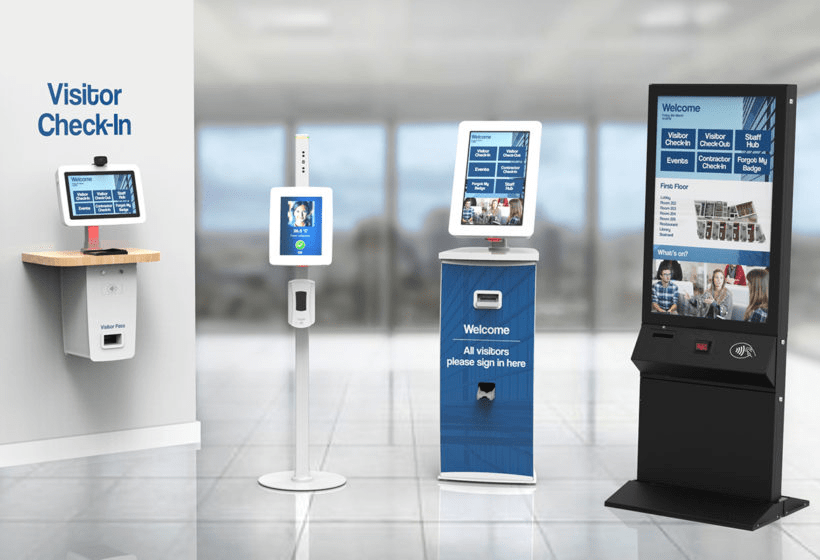
Digital visitor logs replace handwritten sign in sheets with structured, electronic systems. Visitors are checked in using tablets, kiosks, or gate systems, and their information is captured in a consistent format.
In Nevada HOAs, this structure makes an immediate difference. Digital logs require required fields to be completed, which eliminates missing information. Entries are legible, time stamped, and stored centrally. Staff no longer rely on memory or handwritten notes.
Most importantly, digital systems provide real time visibility. Managers and security staff can see who is currently inside the community and review access history without searching through paper records.
One of the biggest misconceptions about digital visitor logs is that they slow down entry. In reality, paper logs are usually the cause of delays.
Handwriting takes time. Explaining what to write takes time. Calling residents for approval takes time. Digital visitor logs reduce these steps. Approved guests and contractors can be verified quickly, and check in becomes predictable rather than chaotic.
In Nevada HOAs where traffic volume is high, faster verified entry reduces congestion, frustration, and the temptation to bypass procedures.
Paper logs degrade in value over time. As pages fill up and logbooks are replaced, records become fragmented. Accountability fades because information is hard to retrieve and unreliable.
Digital visitor logs, by contrast, improve over time. Records remain searchable, consistent, and complete. HOAs can review access patterns, identify frequent vendors, and respond confidently when questions arise.
Accountability is not dependent on who was working that day. It is built into the system.
Vendors and contractors are a major stress test for visitor logging systems. Landscaping crews, maintenance providers, utilities, and construction contractors may enter Nevada communities daily or weekly.
Paper logs struggle to handle this repetition. Entries become rushed, details are skipped, and tracking arrival and departure times accurately is nearly impossible.
Digital visitor logs allow HOAs to track contractor access consistently, record entry and exit times, and maintain service history records. Approved vendor lists and scheduled access reduce confusion at entry points and improve accountability.
When disputes, complaints, or insurance claims arise, visitor records become critical. Nevada HOAs need documentation they can rely on.
Paper logs often fail under scrutiny. Missing entries, illegible handwriting, or lost logbooks weaken the HOA’s position. Digital visitor logs provide time stamped, searchable records that clearly show who entered the community and when.
This documentation reduces uncertainty and protects the HOA during investigations.
Paper visitor logs expose personal information to anyone who can see the logbook. Names, license plate numbers, and visit times are often visible to other visitors and staff without restriction.
Digital visitor logs improve privacy by limiting access to authorized personnel and storing data securely. Information is collected consistently and handled according to defined policies. For Nevada HOAs, this professional handling of visitor data reduces risk and builds trust with residents and guests.
Paper logs place a heavy burden on staff. Guards and front desk teams must explain procedures repeatedly, decipher handwriting, and make judgment calls during busy periods. Over time, this leads to fatigue and shortcuts.
Digital visitor logs reduce staff workload by providing clear approvals and guided check in steps. Staff follow the same process every time, regardless of shift or experience level. This consistency improves security and reduces conflict with residents.
Paper logs may seem cheaper initially, but their hidden costs add up. Time spent managing logbooks, resolving disputes, responding to incidents, and handling resident complaints all carry operational cost.
Digital visitor logs reduce these hidden costs by improving efficiency, reducing errors, and minimizing risk. For many Nevada HOAs, the long term savings outweigh the short term expense.
The shift away from paper visitor logs is not about technology trends. It is about practicality. As Nevada communities grow and visitor traffic increases, paper systems simply cannot keep up.
Digital visitor logs provide speed, accuracy, visibility, and accountability that paper logs cannot match. They support modern HOA operations rather than working against them.
GoAccess is designed specifically for HOA visitor management and replaces paper logs with secure digital visitor tracking. Nevada HOAs use GoAccess to manage guests, vendors, and contractors efficiently while maintaining accurate access records.
The platform provides real time visibility, structured approvals, and reliable documentation without adding operational complexity. Paper processes are replaced with workflows designed for real HOA environments.
The choice between paper and digital visitor logs for Nevada HOAs is no longer just a preference. It is a question of whether current systems can support modern residential life.
Paper visitor logs struggle under volume, create security gaps, and expose HOAs to unnecessary risk. Digital visitor logs provide clarity, control, and professionalism that today’s communities require.
For Nevada HOAs looking to improve security, reduce delays, and operate confidently, the move from paper to digital visitor logs is not an upgrade. It is a necessity.