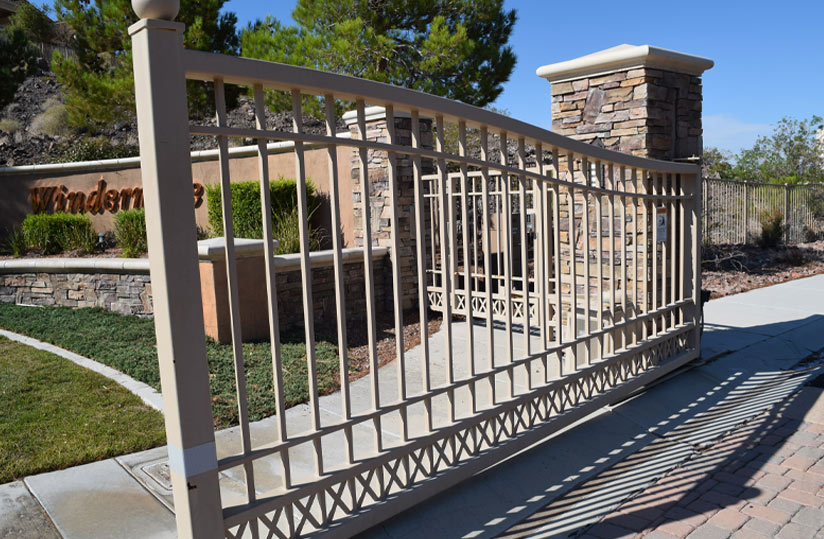
Homeowners associations across Nevada are managing increasingly complex visitor traffic. From large master planned communities in Las Vegas and Henderson to growing residential neighborhoods in Reno and Sparks, Nevada HOAs must control access efficiently while maintaining strong security standards.
As visitor volume increases and expectations rise, many Nevada HOAs are replacing paper visitor logs with digital visitor management systems. This article explains why digital visitor logs are becoming essential for Nevada HOAs, how they work, and the operational and security advantages they provide.
Nevada communities experience a unique blend of residential growth, tourism, and transient visitor activity. Even in non resort areas, HOAs manage frequent guest visits, daily vendors, contractors, and delivery services.
In gated and guard monitored communities, every visitor represents a security decision. Without accurate tracking, HOAs face blind spots that can lead to unauthorized access, inconsistent enforcement, and resident dissatisfaction. Digital visitor logs bring structure and visibility to this environment.
Paper visitor logs are still used in many Nevada communities, but they struggle to keep up with modern access demands.
Handwritten entries are often rushed, incomplete, or illegible during busy periods. Logbooks may be left exposed at guardhouses, creating privacy concerns. Over time, records are lost, damaged, or stored inconsistently, making them difficult to retrieve when needed.
In high traffic Nevada HOAs, these weaknesses quickly become security and liability risks.
A digital visitor log replaces paper sign in sheets with a secure electronic system used at gates, guardhouses, or front desks. Visitors are checked in using tablets or gate systems, and their information is recorded automatically.
Digital logs capture visitor details, authorization status, and precise entry and exit times. Records are stored centrally and can be accessed by authorized HOA staff when required. Instead of fragmented paper records, HOAs gain a single, reliable source of access data.
The goal is to make visitor tracking faster, clearer, and more consistent.
Digital visitor logs significantly strengthen security by creating accountability at every entry point. When incidents occur, staff and managers no longer rely on memory or incomplete notes. Decisions are supported by accurate data.
Nevada HOAs gain:
One concern HOAs often have is that stronger security will slow down entry. In practice, digital visitor logs usually improve speed.
Digital check in eliminates handwriting delays and reduces the need for phone calls to residents. Approved guests and vendors can be verified quickly, keeping traffic moving even during peak hours.
Faster entry reduces congestion, frustration, and the temptation to bypass procedures.
Nevada is home to many large gated and master planned communities with multiple entry points. Managing access consistently across these environments is difficult without centralized systems.
Digital visitor logs provide unified oversight across all gates and shifts. Property managers and HOA boards gain visibility without being physically present, and staff follow the same procedures regardless of location.
Consistency becomes achievable at scale.
Vendors and contractors represent a significant portion of daily traffic in Nevada HOAs. Landscaping crews, maintenance providers, utilities, and renovation contractors often enter communities multiple times per week.
Digital visitor logs allow HOAs to track vendor access accurately, record arrival and departure times, and maintain service history records. Approved vendor lists reduce confusion and delays at the gate.
Clear vendor tracking improves accountability and reduces disputes.
Accurate visitor records are essential for risk management. When disputes, complaints, or insurance claims arise, Nevada HOAs need reliable documentation.
Digital visitor logs provide clear evidence of who entered the community and when. This documentation strengthens the HOA’s position and reduces uncertainty during investigations.
Paper logs rarely offer the same level of reliability or accessibility.
Visitor logs often contain personal information. Paper logbooks left in public view expose visitor data unnecessarily.
Digital visitor logs improve privacy by restricting access to authorized staff and storing data securely. Information is collected consistently and handled according to defined policies, reducing exposure and building trust with residents and visitors.
Residents expect security without inconvenience. Guests expect a smooth and professional entry process.
Digital visitor logs reduce wait times, eliminate confusion, and create predictable entry procedures. Guests arrive feeling expected, and residents spend less time dealing with access related interruptions.
In competitive Nevada housing markets, this professionalism adds real value.
GoAccess is designed specifically for HOA visitor management, making it well suited for Nevada communities with high visitor volume.
Nevada HOAs use GoAccess to digitize visitor logs, manage guests and vendors efficiently, and maintain accurate access records across all entry points. The platform supports daily operations while strengthening security and oversight.
Nevada HOAs that succeed with digital visitor logs focus on clarity and consistency. They define visitor access policies clearly, encourage guest pre registration, and train staff to use the system confidently.
Regular review of visitor data helps communities identify trends and improve operations over time.
Digital visitor logs have become a foundational tool for Nevada HOAs. As communities grow and visitor traffic increases, paper based systems no longer provide the visibility or reliability needed for effective access control.
By adopting digital visitor management, Nevada HOAs improve security, reduce gate delays, and deliver a more professional experience for residents and visitors alike.